
Introduction
Stainless Steel vs Brass Grab Bars You are holding a stainless steel grab bar in one hand and a brass one in the other, both labelled “corrosion resistant”, and you need to choose before someone in your house takes a fall. Both metals can work, but they do not perform equally in a wet shower, so below you get a clear verdict, a decision chart to screenshot, and a five-step spec check that takes about ten minutes.
Table of Contents
Quick Answer: Stainless steel, specifically type 304, is the better grab bar material for most bathrooms because it pairs high strength with strong rust resistance in wet showers. Brass works when you want a warm, decorative look and the bar sits away from heavy spray. Either metal must hold 250 pounds with its mounting to meet ADA strength rules.
What You Need to Know
- Type 304 stainless steel is the best default for showers and tubs.
- Brass is suitable for decorative bathrooms and drier areas, but it is important to check both its finish and core metal.
- The ADA names no approved metal. It tests the whole system against 250 pounds of force.
- The wall behind the bar matters as much as the metal in front of it.
- Avoid 430 stainless and thin-plated bars in any wet room.
Which Is Better: Stainless Steel or Brass Grab Bars?
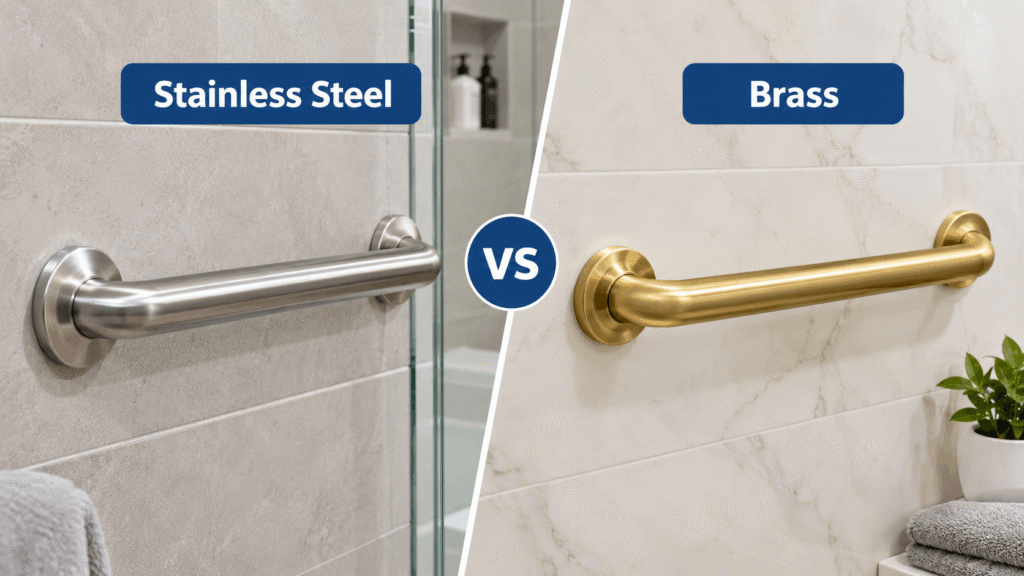
Stainless steel is better for most bathrooms, and brass is better when the appearance leads and the bar stays out of heavy spray. Stainless steel is chosen for performance, while brass is chosen for looks.
| Factor | Stainless steel (304) | Brass |
|---|---|---|
| Strength | Very high, the standard for load-rated bars | High when solid or with a strong core |
| Rust resistance | Excellent in showers | Good, but the finish decides how long it lasts. |
| Grip | Best with a peened or knurled texture | Usually smooth, so grip depends on the finish. |
| Look and feel. | Clean and modern, cooler to the touch | Warm and traditional |
| Upkeep | Wipes clean, resists mildew | Plated or lacquered finishes can tarnish or flake |
| Cost | Mid to higher | Often higher for decorative finishes |
| Best for | Showers, tubs, heavy daily use | Design-led bathrooms, dry areas |
Why Does Stainless Steel Usually Win in a Shower?
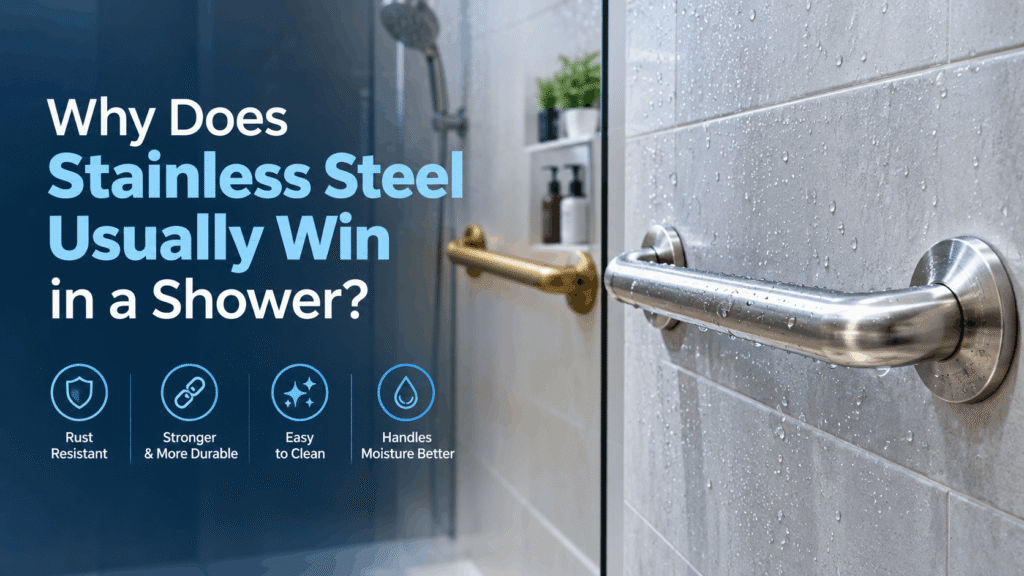
Stainless steel keeps its strength and surface in a wet room without relying on a coating. Grade matters more than the word “stainless” on the box. Type 304 contains chromium and nickel and resists rust in humid bathrooms, while grade 430 is cheaper, has no nickel, and rusts more easily. Chrome-plated steel is not stainless at all, and coastal homes or heavily chlorinated water call for type 316. One weak spot is grip, which a peened or knurled texture fixes, as our guide to textured vs. smooth grab bars explains.
When Is Brass the Better Choice?
Brass is the better choice when your bathroom uses warm metals and the bar sits outside the heaviest spray. Brass earns its place on looks, not on grip or price. It is a copper-zinc alloy that resists corrosion and feels warmer in the hand than stainless steel. If you like the look but want stainless performance, choose a stainless bar with a brass-tone finish. Check three things before buying:
- The finish. The brass may last while its plating or lacquer tarnishes or flakes in humidity.
- The core metal. Some decorative “brass” bars have a different metal underneath, so read the spec sheet.
- Lead content. Older brass products may contain lead, so choose bars stated to be lead-free.
Does the Metal Matter More Than the Installation?
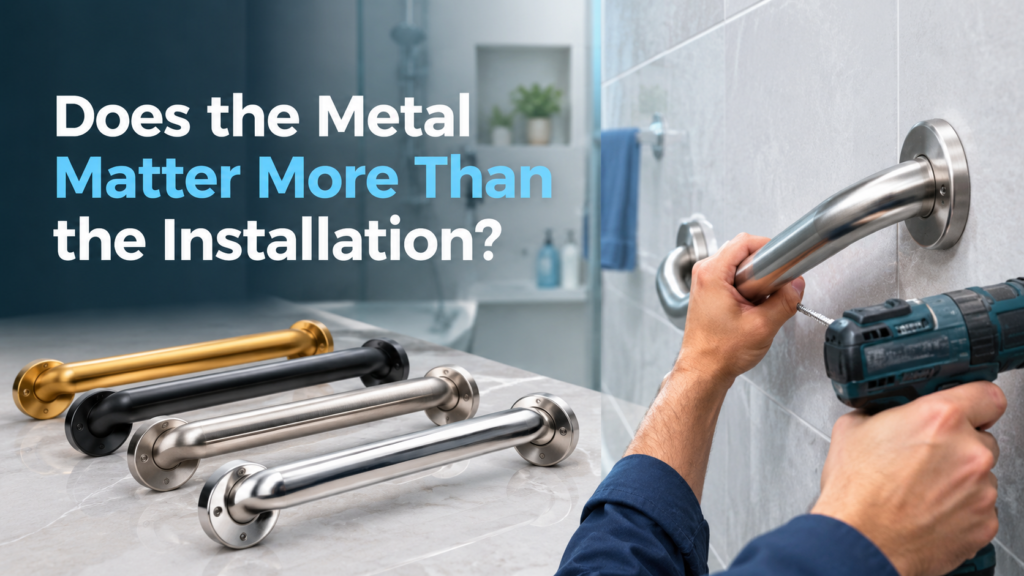
No. A strong bar on a weak wall fails at the wall. The 2010 ADA Standards for Accessible Design name no approved metal and instead require that stresses stay within allowable limits under 250 pounds of force on the bar, fasteners, mounting, and supporting structure. Under Section 609, round bars measure 1¼ to 2 inches across and mount 33 to 36 inches above the floor. The ADA applies legally to public buildings, but installers use it as the benchmark for homes too.
The stakes are real. According to the CDC’s older adult falls facts, more than one in four people aged 65 and older fall each year, and a CDC-hosted study found bathroom falls were more than twice as likely to cause injury as living room falls. The CDC’s STEADI fact sheet lists grab bars among its prevention steps, and the Access Board’s bathing rooms guide notes that vertical bars help when stepping into a tub or shower.
How Do You Choose Between Stainless Steel and Brass? (5 Steps)
The whole process takes about ten minutes, plus the time to find your studs. Verify the grade, the load rating, and the wall before you look at the finish.
- Map the wet zone. Note where the shower spray hits the wall. Use 304 or 316 stainless inside that zone, and brass only outside it.
- Confirm the metal grade. Look for “304” or “316” on the spec sheet, not just “stainless”. A magnet sticks firmly to 430 and plated steel but weakly or not at all to 304, which is a quick screen, not proof.
- Check the load rating and tube thickness. Look for at least 250 pounds with hardware included. Commercial-style bars commonly use 18-gauge tubing, about 0.048 inch thick, while 20- to 22-gauge can dent under load.
- Check diameter and finish. Choose a round bar between 1¼ and 2 inches across, with a peened or knurled surface for showers.
- Find the studs before you buy. US wood studs commonly sit 16 inches apart, centre to centre. Plan the bar at 33 to 36 inches high, and add wall blocking if the studs land in the wrong place. Our guides on shower grab bar height and ADA rules and grab bar placement in a small bathroom help you place it.
Which Metal Fits Your Bathroom? The Decision Chart
Stainless steel appears in most rows because most bathrooms are wet.
| Your situation | Best pick | Why? |
|---|---|---|
| Inside a wet shower or tub | Textured 304 stainless | Rust resistance plus wet-hand grip |
| Coastal home or chlorinated water | 316 stainless | Extra corrosion resistance |
| Beside the toilet | Stainless or brass | Less moisture, so appearance can lead |
| Brass or bronze fixtures | Brass, or stainless with a brass-tone finish | Matches the room without losing strength |
| Heavy daily use or a larger user | Stainless plus wall blocking | The load path matters most. |
| Tight budget | Genuine 304 stainless | Avoid thin-plated bars |
| Temporary or rental setup | Portable aid for light balance only | Not a substitute for permanent support |
How Do You Clean and Maintain Each Metal?
Wipe both metals with a soft cloth and mild soap, rinse, and dry. Harsh scrubbing does more damage to finishes than daily moisture does. Avoid abrasive pads and strong chemicals, and every few months grip the bar and push and pull firmly. Any wiggle, rust bloom, or loose cover plate means the mounting needs attention.
What Are the Most Common Mistakes When Choosing Grab Bars?
The finish of a grab bar affects its appearance, but it does not determine how much weight the bar can safely support.
- Choosing a bar based only on its finish. Check the actual metal construction and stated weight capacity before buying.
- Assuming every stainless-steel bar is 304 grade. Some lower-cost models may use 430 stainless steel or other plated metals.
- Attaching the bar only to drywall. For secure installation, fasten it to wall studs or properly installed blocking.
- Using a shower arm or towel bar for support. These fixtures are not designed to carry a person’s body weight.
- Treating plastic grab bars as your main support. Before relying on one, read our guide on whether plastic grab bars are safe for elderly users.
FAQs
What material should you choose for a bathroom grab bar?
For most bathrooms, 304 stainless steel is a practical choice because it offers good strength, corrosion resistance, and easy maintenance in damp environments. Brass can work well when appearance is important, while plastic-only models are better suited to light balance assistance rather than primary weight support.
Is stainless steel a better option than brass?
For many bathroom applications, stainless steel offers practical advantages. Brass is durable and has a traditional, decorative appearance, but its surface may discolour or deteriorate over time in consistently damp conditions. Stainless steel generally requires less maintenance. Brass makes sense when you want the grab bar to coordinate with other bathroom fixtures.
Can a brass or stainless-steel shower arm be used for support?
No. Both brass and stainless steel can be suitable plumbing materials, but a shower arm is designed to carry water, not a person’s body weight. It should never be treated as a grab point. For support, install a properly rated grab bar instead, with a capacity of at least 250 pounds.
What should you look for in a good grab bar?
A 304 stainless-steel grab bar with a minimum 250-pound load rating is a solid choice for many bathrooms. For a shower, look for a comfortable round diameter between 1¼ and 2 inches and a surface that provides dependable grip when wet. The bar should also be securely attached to studs or suitable structural blocking and installed at the appropriate height.
How are 304, 316, and 430 stainless steel different?
304 stainless steel is widely used for bathroom applications and provides good corrosion resistance. 316 offers additional resistance and can be useful in coastal environments or areas exposed to high levels of chlorine. 430 is generally a lower-cost option and contains no nickel, but it does not resist corrosion as well as 304 in consistently humid conditions.
Can a brass grab bar comply with ADA requirements?
Yes, the material itself does not automatically determine ADA compliance. The ADA Standards focus on requirements such as dimensions, positioning, clearances, and the ability of the grab bar and its mounting system to withstand the required load. A properly designed brass grab bar can meet those performance requirements. ADA requirements generally apply to covered public and commercial facilities rather than ordinary private residential bathrooms.
When should you have a professional install a grab bar?
Professional installation is worth considering when you cannot identify suitable studs or structural blocking, particularly when the wall is tiled and you do not know what is behind it. Proper anchoring is critical because a grab bar that pulls away from the wall can create the exact fall hazard it was installed to help prevent.
What to Do Next
Choosing the right grab bar material is an important first step, but proper placement and installation are equally essential for safety, stability, and everyday use. Once you have selected the appropriate material, consider where the grab bar should be positioned and how high it should be mounted.
- Read our guide on corner vs. back wall shower placement to understand the advantages and considerations of each location.
- Then review our guide to shower grab bar height and ADA guidelines for recommended mounting heights and placement requirements.