
Introduction
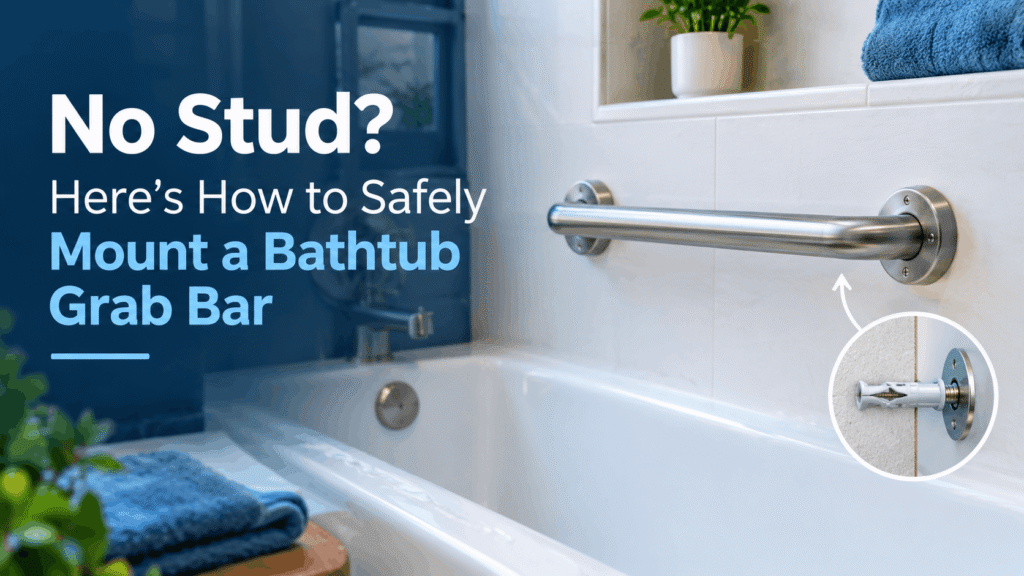
No, stud, you ran the stud finder along the tub wall, and the beep landed nowhere near where the bar actually needs to go. That gap between “where the framing is” and “where a hand needs to land during a slip” is exactly what this guide solves.
Table of Contents
Quick Answer: Yes, a bathtub grab bar can be installed without hitting a stud, as long as it uses anchors rated to resist at least 250 pounds of force—heavy-duty toggle bolts or a SecureMount-style hollow-wall system—matched to the wall material behind the tub. Standard drywall anchors, adhesive strips, and suction cups are not built for full body-weight support.
What You Need to Know
- Stud mounting is still the strongest option whenever the framing lines up with the placement you need.
- No stud in the right spot doesn’t rule out a safe install—the anchor just has to match the wall.
- Grab bar hardware built to the U.S. accessibility standard resists at least 250 pounds of force.
- Adhesive-only and suction grab bars work fine as light balance aids, never for transfers or catching a fall.
- If you have concrete or block walls, or any wall that you are unsure can support that load, it is best to hire a licensed installer.
Yes—Here’s What a No-Stud Install Actually Takes
A bathtub grab bar without a stud can be as safe as one bolted into framing, but only if the anchor does the stud’s job. The anchor, not the stud, is what actually determines whether the bar will hold.
That means picking hardware rated for hollow-wall or tile-and-fiber use, not the plastic wall plugs sold for hanging a picture frame. The wall material—drywall, tile-over-drywall, or a fiberglass surround—decides which anchor type is appropriate, which is why the decision table further down matters more than the general “yes.”
Why Studs Are Still the First Choice
Wood or metal studs give a screw something structural to bite into, which is why installers default to them first. Stud mounting still produces the strongest, most consistent hold of any method.
Under the 2010 ADA Standards for Accessible Design, Section 609, grab bar hardware and the wall structure supporting it must resist at least 250 pounds of force. That figure exists because a person losing their footing doesn’t apply gentle, steady pressure—they grab hard and fast. A stud gives that force somewhere solid to land.
The No-Stud Anchor Decision Table (By Wall Type)
Here’s the piece most guides skip: which anchor actually fits which wall.
| Wall Type | Best No-Stud Anchor | Approx. Weight Rating | Notes |
|---|---|---|---|
| Standard drywall (1/2″) | Heavy-duty toggle bolt or snap-toggle | 100–265 lbs per bolt | Use 2–3 across the bar’s mounting flange. |
| Tile over drywall | Toggle bolt through tile with pilot hole. | 100–265 lbs per bolt | Drill the tile slowly with a carbide or diamond bit to avoid cracking. |
| Fiberglass tub/shower surround | SecureMount-style hollow-wall anchor system | Rated to 250 lbs | Designed specifically for thin, non-structural fiberglass shells |
| Poured concrete or concrete block | Masonry sleeve or wedge anchor | 250+ lbs | Requires a hammer drill; professional installation recommended |
| Old lath-and-paste | Toggle bolt sized for wall thickness | Varies — test first | Plaster is brittle; oversized pilot holes crack the surface |
Save or screenshot this anchor decision table — it covers every wall type you’re likely to hit behind a bathtub.
Toggle Bolts vs. SecureMount-Style Anchors—What’s the Difference?
A toggle bolt works by pushing a spring-loaded metal wing through a drilled hole; once inside the wall cavity, the wing snaps open and grips the back of the drywall as the bolt tightens. A toggle bolt spreads load across the wing, not the drywall surface, which is what lets it hold real weight in hollow walls.
A SecureMount-style system works differently: it uses an expanding anchor sleeve plus a mounting flange that locks onto the sleeve from outside the wall, so the fiberglass or tile surface itself never bears the load. That’s why this style is the more common choice specifically for fiberglass tub surrounds, where the shell isn’t structural at all.
Installing a Grab Bar in a Fiberglass Bathtub Surround Without a Stud
Fiberglass tub surrounds are the single most common no-stud scenario, since the shell sits in front of the framing and rarely lines up with a stud at the exact spot a bar is needed.
- Mark the mounting points using the bar’s paper template. Tape the template to the wall, check it with a level, and mark each hole location with a permanent marker.
- Drill with a hole saw sized to the anchor kit—typically a 1¼-inch hole saw for SecureMount-style systems, cutting through the fiberglass shell only.
- Insert the anchor sleeve into each hole and tighten it from the inside using the pull tab or wrench included with the kit until it seats firmly against the back of the fiberglass.
- Attach the mounting flange to the anchor with the screws provided, then slide the grab bar itself onto the flanges.
- Tighten the set screws and snap the cover plates on. A straightforward two-point install like this typically takes 15–20 minutes once the layout is marked.
When You Should Add Blocking Instead of Relying on Anchors
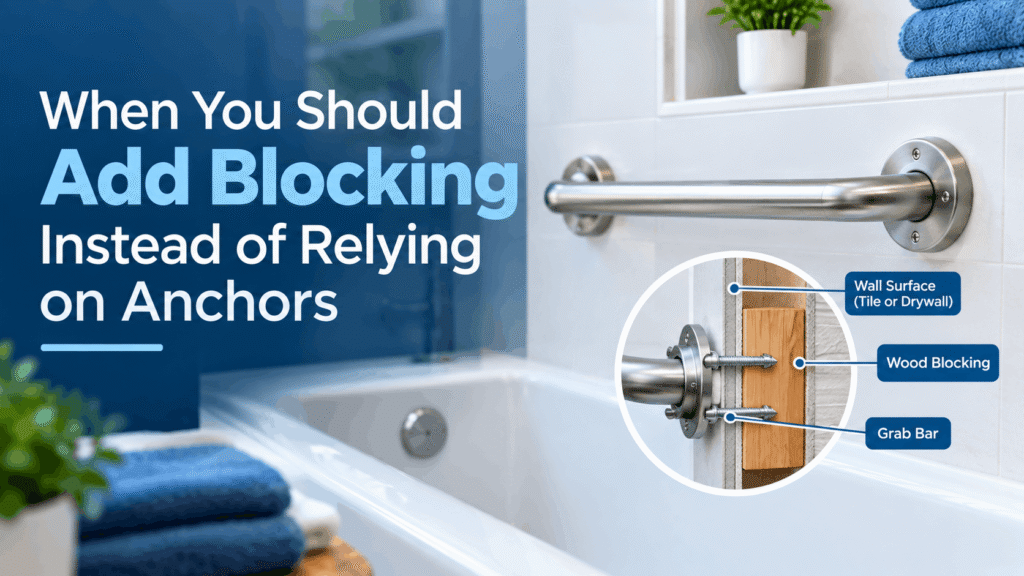
If the bathroom is already being remodelled, adding blocking is the stronger long-term fix. Horizontal blocking — a piece of lumber fastened between the existing studs — turns any point along that span into a stud-strength mounting location.
This only makes sense when the wall is already open, since cutting into a finished, tiled wall just to add blocking usually costs more in repair than the anchor route would have saved. For a full bathroom accessibility remodel, though, adding blocking behind the tub and shower walls before the surround goes back up removes the no-stud problem entirely.
What NOT to Use — Adhesive and Suction Bars for Real Support
Adhesive-mounted and suction-cup grab bars are not a substitute for a mechanically anchored bar. Neither is rated for the sudden, full-body-weight load a fall produces.
They can help as a light touchpoint for balance—steadying yourself while reaching for a towel, for example—but according to CDC data on older adult falls, more than 14 million adults 65 and older report falling each year, and a fall in the tub is exactly the moment a bar needs to hold instantly, not peel away.
How to Find Out If There’s Actually No Stud Where You Need One
Before committing to an anchor-only install, confirm there’s genuinely no stud within reach of the bar’s mounting flange — studs are typically spaced 16 inches apart, so shifting the bar a few inches can sometimes catch one side. Our guide on finding studs behind a bathtub wall walks through locating them through tile and fiberglass specifically, which behave differently than open drywall.
Where to Place the Bar Once You’ve Solved the Stud Problem
The anchor type solves how to mount the bar; it doesn’t solve where. Height and position still follow the same accessibility guidelines whether you hit a stud or not—see our bathtub grab bar height and placement guide for exact measurements before you drill.
Common Mistakes to Avoid
- Using standard plastic wall anchors instead of grab-bar-rated hardware. They’re built for towel bars and picture frames, not fall-prevention loads.
- Skipping the pilot hole on tile. Drilling straight through glazed tile without starting slow on a low-speed setting is the most common cause of cracked tile during this exact install.
- Guessing at anchor placement instead of using the included template. A misaligned flange puts uneven stress on one anchor instead of spreading it across all of them.
- Assuming every hollow-wall anchor is rated for 250 lbs. Many aren’t — check the packaging for a stated weight rating before buying.
When to Call a Professional Instead
Concrete, block, and any wall where the material or condition is genuinely uncertain are the cases worth handing to a licensed installer. A grab bar that looks solid but isn’t rated for real weight is more dangerous than no grab bar at all, since it creates false confidence at the exact moment someone needs it to hold.
FAQs
Can you install a grab bar without studs?
Yes. A grab bar can be installed without a wall stud when you use heavy-duty toggle bolts or a manufacturer-approved hollow-wall anchoring system designed for grab bars. Always choose hardware that is specifically rated for the required load and compatible with your wall material. Under U.S. accessibility standards, grab bars and their mounting hardware must withstand at least 250 pounds of force.
Can I hang something if there isn’t a stud?
For lightweight items such as towel bars or small shelves, ordinary hollow-wall anchors may be suitable. Grab bars are different because they can be subjected to sudden, high loads when someone uses them to steady themselves or prevent a fall. For that reason, use an anchoring system specifically designed and tested for grab bars rather than a general-purpose drywall anchor.
Are there shower grab bars that don’t require screws?
Yes. Suction cups and adhesive-mounted grab bars are available and can be installed without drilling. However, these products are generally intended to provide a light handhold for balance rather than support a person’s full body weight. They should not be used as a substitute for a properly mechanically anchored grab bar when fall protection or weight-bearing support is needed.
How do you install a grab bar in a fiberglass shower without studs?
Start by using the manufacturer’s template to mark the mounting holes. Drill the openings according to the instructions supplied with the approved anchor system, then install the expanding anchors through the fiberglass wall. Once the anchors are secured, attach the mounting flanges and fasten the grab bar. Installation time varies by product and wall construction, so follow the manufacturer’s instructions rather than relying on a fixed time estimate.
How much weight should a bathtub grab bar hold?
The 2010 ADA Standards, Section 609, specify that grab bars and their mounting systems must resist a force of at least 250 pounds. This requirement applies to the complete installation, so the wall structure, mounting hardware, and grab bar all need to be suitable for the intended load.
How long does a no-stud grab bar installation take?
Installation time depends on the wall material, anchor system, and the condition of the installation area. A straightforward installation in fiberglass or drywall may be relatively quick once the mounting position has been marked. Tile requires more careful drilling, while concrete or masonry can take considerably longer and may be better handled by a qualified professional.
What to Do Next
Before choosing an anchor system, first determine what is behind the bathtub wall. Our guide on how to find studs for bathtub grab bars explains practical ways to locate available studs. Then use our grab bar height and placement guide to determine the proper mounting position. A secure installation starts with both the right anchoring method and the correct placement.