
Introduction
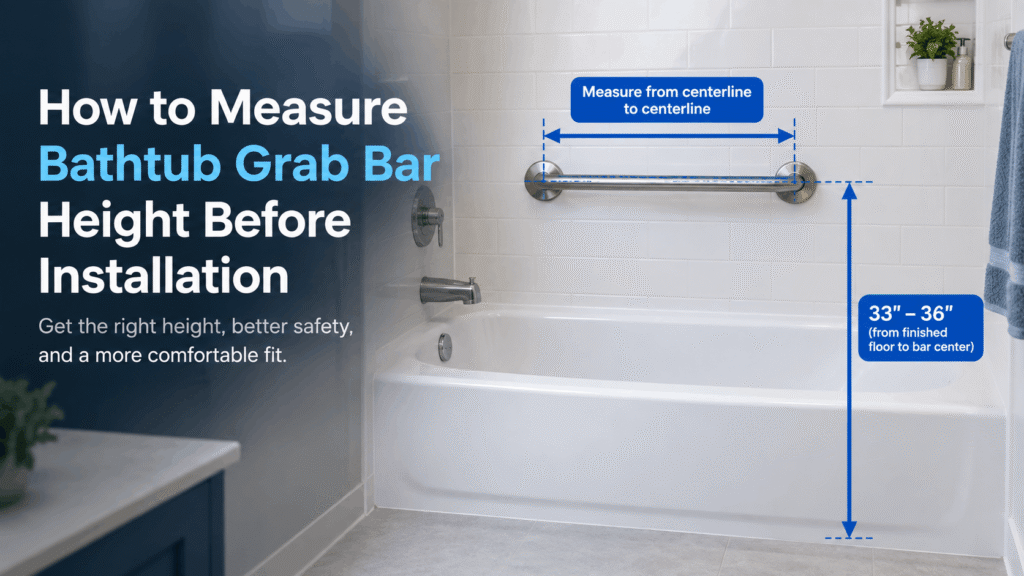
How to measure bathtub grab bar height You’ve got the grab bar out of the box, a tape measure in hand, and no clear idea where that first pencil mark should go. Maybe a doctor mentioned it after a fall. Maybe you’re renovating ahead of time, before anyone actually needs it. If this measurement is correct, the bar will work when someone reaches for it; if it’s off by two inches, it may not.
Table of Contents
Quick Answer: For a bathtub, a horizontal grab bar is typically mounted 33 to 36 inches above the finished bathroom floor, per ADA reference guidelines. A second bar on the back wall commonly sits 8 to 10 inches above the tub rim. Measure from the correct floor reference, mark the height, and confirm the spot hits a stud before drilling.
What you need to know:
- Height is measured to the bar’s centreline, from the finished floor, unless the spec sheet says otherwise.
- The commonly referenced range for a standing adult is 33–36 inches above the bathroom floor.
- A vertical entry bar is measured from inside the tub, not the bathroom floor—a different reference point than most people expect.
- Confirm a stud or blocking sits behind the mark before drilling. The height means nothing if the bar can’t hold weight.
- One height rarely fits everyone in the house—the actual user should help set the mark.
What You’ll Need Before You Measure
You need five items, and you probably already own most of them. Nothing here requires a speciality tool or a trip to a hardware store.
- A tape measure—a standard 12- or 16-foot retractable tape is plenty; you’re only working with a couple of feet of wall.
- A pencil or painter’s tape for the first mark. Painter’s tape is worth the extra step because it lets you move the mark without leaving a permanent line on the tile.
- A torpedo level so the bar sits true once you’re ready to drill, not just at one measured point.
- A stud finder to check what’s actually behind the wall before that mark becomes a hole.
- The grab bar’s spec sheet, if you have one, since some manufacturers specify their own centreline height or flange spacing.
Where to Measure From: Bathroom Floor or Tub Floor?
The reference point depends on which bar you’re placing, and mixing this up is the single most common measuring mistake people make with bathtub grab bars. Most horizontal bars mounted on the bathroom wall — above the rim, on the back wall, on the entry side — are measured from the finished bathroom floor, the same floor you’re standing on outside the tub.
A vertical entry bar mounted on the footwall or control wall, though, is commonly referenced from the bathtub floor — the surface inside the tub itself. That surface usually sits several inches below the bathroom floor because of the tub’s basin depth, so a number that looks identical on paper can land in two very different spots depending on which floor you started from.
This is worth double-checking every time, even if you’ve installed a grab bar before. A vertical bar measured 36 inches from the wrong floor can end up four or five inches off from where it needs to be, which is enough to make the bar awkward to reach exactly when someone’s off balance and needs it fastest.
How to Measure for Height: 6 Steps
1. Gather your tools first. Have the tape measure, level, stud finder, and painter’s tape ready before anyone steps into the tub. Doing a dry run without tools halfway through wastes time and usually means remeasuring.
2. Have the primary user stand or step where they’ll actually enter or exit. Not the centre of the tub, not a generic “average” spot — the exact place their foot or hand goes when they use the tub for real.
3. Do the arm test. Have them bend their elbow to roughly a 90-degree angle, as if they’re about to shake hands with someone standing beside the tub. Where their knuckles naturally land is a close, personal reference point that a printed chart can’t give you on its own.
4. Mark that spot with painter’s tape, not a permanent pencil line. You’ll want the flexibility to nudge the mark up or down after comparing it against the reference chart below.
5. Measure from the correct floor reference to the mark. Use the bathroom floor for wall-mounted horizontal bars and the tub floor for a vertical entry bar. Record the number in inches so you’re not relying on memory later.
6. Run the stud finder across the marked height before committing to a drill mark. If the mark misses solid backing, shift the bar’s position slightly within a reasonable range, or plan to add blocking behind the wall. Never rely on drywall alone to hold a grab bar’s rated weight.
Bathtub Grab Bar Height Reference Chart
Four positions cover almost every bathtub grab bar installation. Here’s where each one typically goes and why.
| Grab Bar Position | Height | Measured From | Why |
|---|---|---|---|
| Horizontal bar, back/side wall | 33–36 in (84–91 cm) | Finished bathroom floor | ADA reference range; fits most standing adults |
| Horizontal bar, above tub rim | 8–10 in (20–25 cm) above the rim | Top of the tub rim | Within easy reach while seated on the rim or transferring |
| Vertical entry bar (foot/control wall) | 36–39 in (91–99 cm), centreline | Bathtub floor | Measured inside the tub, not the bathroom floor |
| Bar near a transfer bench/seat | 8–10 in (20–25 cm) above the seat | Top of the seat surface | Gives leverage to push up from a seated position |
Save or screenshot this height chart — it covers the four spots where a bathtub grab bar most commonly goes, so you don’t have to research each measurement separately.
Does Height Change for a Seated or Wheelchair User?
Yes, and it usually means measuring from the seat rather than the floor. A bar meant to be used from a shower bench or wheelchair transfer point should sit relative to that seat surface, not the standard floor-based range built for a standing adult. The 8- to 10-inch-above-the-seat figure in the chart above is a reasonable starting point, but the seat’s own height varies by model.
For anyone recovering from surgery, a stroke, or a joint replacement, a physical or occupational therapist’s in-home assessment will beat any general chart. Bring the chart to that conversation as a starting point, not a final answer—a professional who’s watched the person actually move will catch things a tape measure can’t.
Vertical vs. Horizontal: Does Orientation Change the Height?
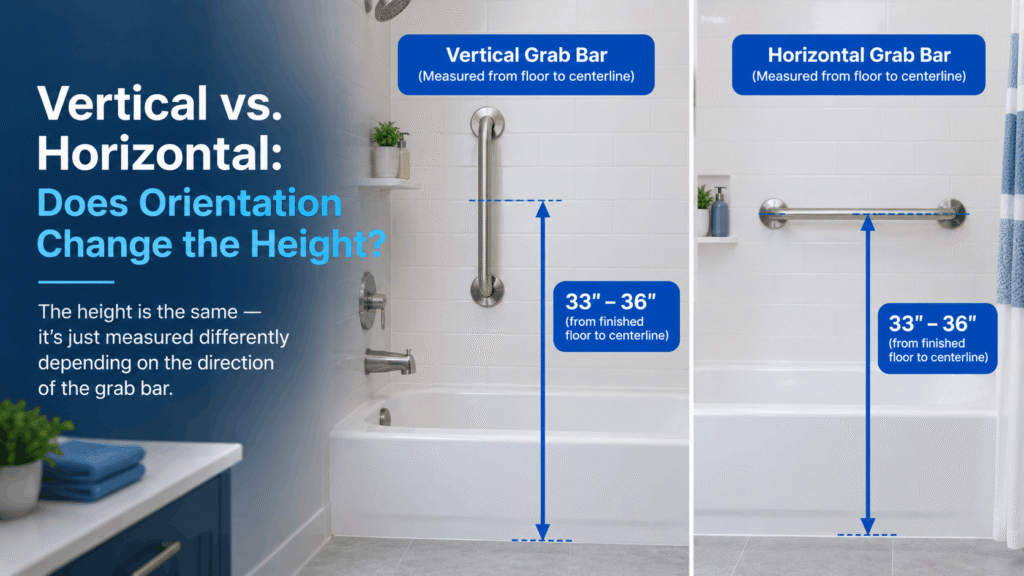
Both orientations exist at different heights because they solve different problems. A horizontal bar supports pushing up or leaning, so it sits at hand height for a standing or seated adult—that’s the 33- to 36-inch range. A vertical bar supports pulling your body weight forward over the tub’s threshold, so its centreline sits lower, closer to where a hand naturally reaches while stepping over the rim rather than while standing fully upright.
Some installers add a short diagonal bar as a compromise between the two. Most occupational therapists advise against it unless it’s specifically prescribed, since a diagonal surface gives a wet hand somewhere to slide rather than a fixed point to hold.
Common Height-Measuring Mistakes
- Measuring a vertical entry bar from the bathroom floor instead of the tub floor. This is an easy reference point to get wrong and can leave the bar positioned too high or too low for safe entry.
- Confusing the bar’s overall length with the mounting-point distance. A grab bar labelled “24 inches” may have a shorter overall physical length because the stated measurement often refers to the distance between the mounting points.
- Using the same height for people with significantly different heights. A position that feels comfortable for a 5’10” user may not work as well for someone who is 5’2″, particularly when several household members use the bar.
- Skipping the stud check because the planned position looks correct. A grab bar secured only to drywall may not provide adequate support. The mounting surface and anchoring method should be verified before installation.
Is the Bar Material Safe?
Height only solves half the problem — what the bar is made of solves the other half. A well-placed bar that’s slippery when wet or too cold to grip confidently doesn’t do its job any better than one mounted at the wrong height. If you’re still deciding between chrome, stainless, or plastic, Are Plastic Grab Bars Safe for Elderly Users? walks through grip, temperature, and weight-rating differences before you buy.
When to Call a Professional Instead
A general height chart can provide a useful starting point, but some installations require professional help. Tiled walls without confirmed structural backing may need an experienced installer who can add appropriate support while minimising the risk of tile damage. People recovering from surgery or those with a high risk of falling may benefit from an occupational therapist’s in-home assessment, which can account for individual reach, balance, and mobility needs.
If the bathroom is in a rental property or care facility, local building or accessibility requirements may also apply. In those situations, verify the required installation details with the appropriate local authority or a qualified professional rather than relying only on general residential recommendations.
FAQs
What height should grab bars be in a bathtub?
Most horizontal grab bars are installed 33 to 36 inches above the finished bathroom floor, a range commonly referenced in ADA accessibility guidelines. A second bar on the back wall of the tub may be positioned about 8 to 10 inches above the tub rim. Residential bathrooms do not generally have to follow ADA requirements, but this range provides a useful starting point for planning.
How are grab bars measured?
Grab bars are typically measured by the distance between the centres of their mounting flanges rather than their total physical length. For example, a grab bar labelled as 24 inches may be slightly longer from end to end once the flanges and curved sections are included. Always check the manufacturer’s specifications when installing a bar in a limited wall space.
What is the recommended height for a grab rail?
For a standing adult, 33 to 36 inches above the finished floor is a commonly used range. However, the ideal height can vary from person to person. A simple arm-position test can help: bend the elbow to approximately 90 degrees and mark the wall where the hand naturally reaches. This can provide a more personalised starting point for placement.
Where should a bath grab rail be located?
Common locations include the wall above the tub for support when sitting down or standing up and the entry-side wall to provide assistance when stepping over the tub edge. Placement should also take into account the location of wall studs or other approved structural support. The safest position is one where the bar can be securely anchored rather than simply placed at the ideal height.
Can I install a grab bar if there’s no stud at the marked height?
Yes, but the installation requires an appropriate structural solution. Depending on the wall construction, this may include a manufacturer-approved grab-bar anchoring system or adding blocking behind the wall. Standard plastic drywall anchors should not be used for a safety grab bar because they are generally not designed to support the loads involved when someone falls or suddenly puts their full weight on the bar.
Does the height change for someone who uses a wheelchair or shower bench?
It can. For someone transferring from a wheelchair or shower bench, grab-bar placement may need to be adjusted according to the seat height and the person’s natural reach rather than relying only on a floor-based measurement. An occupational therapist can assess the person’s reach, grip strength, balance, and transfer technique to determine a more suitable position.
What to Do Next
Once you have marked the proposed height and confirmed that the grab bar can be securely supported, consider the material and grip style before making a purchase. For a closer look at durability and grip considerations, see Are Plastic Grab Bars Safe for Elderly Users?.