
Introduction
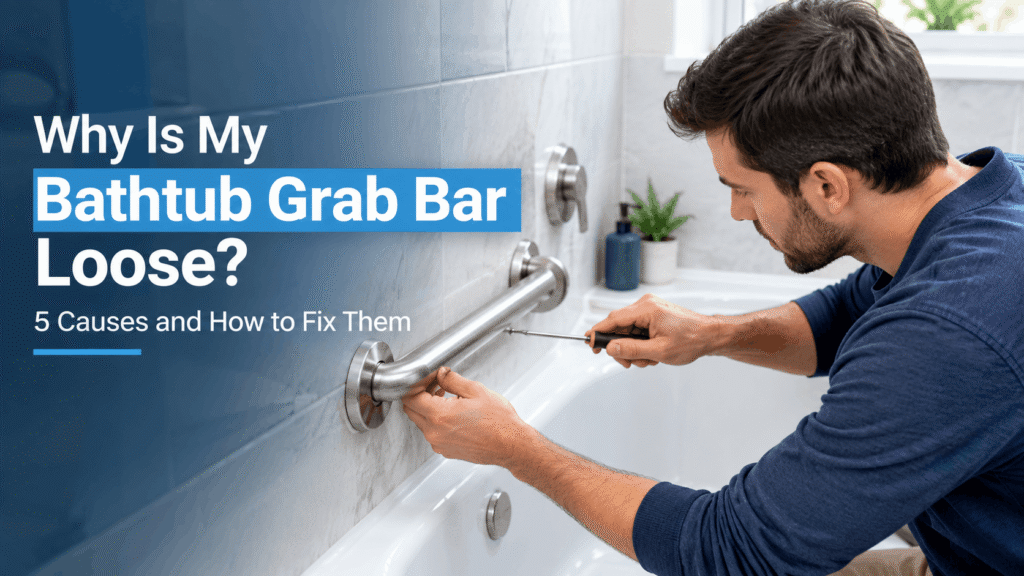
Why is my bathtub grab bar loose? Your grab bar shifted under your hand while you were stepping out of the tub, and now every step feels risky. A loose bar is common and usually fixable, and this guide shows you how to find the cause and repair it safely.
Table of Contents
Quick Answer: A bathtub grab bar is usually loose because the screws missed a stud, the screws were stripped out of drywall, the set screw or flange cover was loosened, moisture weakened the wall behind the tile, or the wrong fasteners were used. Stop using it until you know which.
What You Need to Know
- A bar that moves is not safe, even if it “mostly holds”.
- The most serious cause is screws that never reached a stud or solid backing.
- A loose set screw or flange cover is the easy fix, and you can test for it in under a minute.
- Tightening screws harder in drywall usually makes the problem worse.
- Soft walls, cracked tile, or no backing behind the wall mean it is time to call a professional.
Why Is My Bathtub Grab Bar Loose?
A grab bar is loose because the load path between the bar and the wall framing has broken somewhere. The break can be at the screws, the flange, or the wall itself.
The five causes, listed in the order that most people encounter them, are as follows:
- The screws missed the stud.
- The holes are stripped, or the anchors failed.
- A set screw or flange cover is loose.
- Water has damaged the wall behind the tile or caulk.
- The wrong fasteners or the wrong location were used.
Each one has a different fix. That is why the diagnosis comes first.
Is a Loose Grab Bar Safe to Use?
No. A loose grab bar should not be used for support until it is repaired, because a bar that shifts during a slip cannot catch your weight.
Section 609.8 of the 2010 ADA Standards for Accessible Design says a 250-pound force applied at any point on the bar, fastener, mounting device, or supporting structure must not exceed the allowable stresses of the materials. Section 609.6 adds that grab bars must not rotate within their fittings.
Those rules cover public and commercial buildings, not private homes. Still, they are a useful benchmark: a bar that wobbles or spins by hand fails both tests.
Falls in the bathroom are also a real risk for older adults. The CDC’s STEADI “Check for Safety” checklist recommends grab bars next to and inside the tub, which only helps if they are secure.
How Do You Test a Grab Bar? The 60-Second Wiggle Test
Ten seconds per end is enough. Do not skip the wall check, because it decides whether this is a DIY job.
5 Common Causes of a Loose Bathtub Grab Bar
1. Screws Missed the Stud
Screws that hold only in drywall or tile backer cannot carry body weight. They may feel secure initially but can become loose within weeks.
Wall studs in most U.S. homes sit about 16 inches apart, centre to centre, and a stud face is only about 1.5 inches wide. That is a small target behind the tile. Read how to find studs for bathtub grab bars before you drill anything. If no stud lines up with the bar, see mounting a bathtub grab bar without a stud.
2. Stripped Holes or Failed Anchors
A screw that spins freely has destroyed the material around it. Gypsum crumbles, and plastic anchors can spin or crack behind tile.
Here is the counterintuitive part: cranking the screw harder does not fix it. It crushes more material and widens the hole.
3. Loose Set Screw or Flange Cover
Some bars move because a small set screw in the flange has backed off, not because the wall failed. The bar spins or wobbles while the flange stays firmly on the wall.
This is the best-case scenario. Tighten the set screw with the hex key that matches your bar, following the manufacturer’s instructions, then retest. A bar that spins in its fitting also fails the no-rotation rule in ADA §609. 6.
4. Water Damage Behind Tile or Caulk
Moisture that gets behind the tile softens the wall, and screws lose their grip. Signs include cracked grout, gaps in caulk, tile that sounds hollow, or a soft patch near the bar.
Water damage is a wall repair problem first and a grab bar problem second. A new screw in a rotted wall will not hold.
5. Wrong Fasteners or Wrong Location
A bar that keeps loosening after repairs usually has a mismatch between the fastener, wall, and position. Screws that are too short, the wrong type of screw, or a mounting location with no framing behind it can all cause repeated failures.
Check the position against bathtub grab bar placement guidelines. Then follow the manufacturer’s instructions for the correct screw type and length, as these can vary by model.
Loose Grab Bar Diagnosis Table
| What you notice | Likely cause | Fix | DIY or pro? |
|---|---|---|---|
| The whole bar moves; the flange looks tight | Screws not in stud, or stripped hole | Re-anchor into a stud or blocking. | DIY (stud) / pro (no blocking) |
| Bar spins inside the flange. | Loose set screw | Tighten with the correct hex key | DIY |
| The flange lifts off the wall. | Screws pulled out of drywall | Move to a stud or add proper backing. | Pro if the wall is hollow. |
| The tile is cracked, or the wall feels soft. | Water damage | Stop using; repair the wall first. | Pro |
| Keeps loosening after fixes | Wrong fastener or location | Replace and relocate. | DIY or pro |
How Do You Tighten a Loose Bathtub Grab Bar?
If the flange is loose, tighten the set screw first. If the mounting plate still moves, the bar may need to be secured directly to a wall stud. Start with the simplest repair before moving on to more involved work.
- Do not use the grab bar. Keep everyone in the household from using it until the problem has been properly fixed.
- Expose the mounting hardware. Carefully rotate or lift the decorative flange cover to reveal the screws underneath.
- Inspect the set screw. Insert the correct hex key for your grab bar and tighten the set screw until it is snug. Avoid overtightening. Afterward, gently test the bar for movement.
- Inspect the mounting screws. If a screw spins freely without tightening against the wall, the threads or anchor may be damaged. Do not continue tightening a stripped fastener.
- Find a suitable wall stud. Use a stud finder to locate nearby framing, then verify the location before drilling. In many homes, wall studs are spaced approximately 16 inches apart, although spacing can vary.
- Secure the bar to the stud. Use the fasteners recommended by the grab bar manufacturer. The screws need to pass through the finished wall materials and penetrate the wood framing sufficiently to create a secure connection.
- Test the installation again. Check both ends of the g
Plan about 15 to 30 minutes for a set screw fix. Re-anchoring takes longer.
If the Screws Just Spin
Larger screws or “wall plugs” in drywall are not a real fix. They may hold briefly, then fail under sudden load. Move the bar to a stud or install backing. If the bar cannot reach a stud, see the guide on mounting without a stud.
Common Mistakes When Fixing a Loose Grab Bar
- Over-tightening screws in drywall. It strips the hole and weakens the hold.
- Using longer screws without checking what is behind the wall. Pipes and wiring can be there.
- Filling stripped holes with toothpicks or caulk. These are cosmetic patches, not structural.
- Ignoring a small wiggle. Small movement often precedes a full failure.
- Reusing a damaged flange or bent bar. Replace damaged parts.
Should You Repair, Replace, or Move the Bar?
Repair if the cause is a set screw or a single stripped screw near a stud. Move or replace if the wall, flange, or bar itself is damaged.
Replace the bar if it is bent, if the flange is cracked, or if it has loosened repeatedly. Move it if no stud or blocking lines up with the current position. For safe positions, use the guides on entry grab bar placement height and bathtub grab bar placement.
When to Call a Professional
Call a professional if the wall is soft, the tile is cracked, or there is no framing behind the bar. These are structural or moisture problems, not fastener problems.
Also call one if the bar is for an older adult or someone with limited mobility, or if you cannot find studs or blocking. A professional can open the wall, add backing, and fix leaks. Do not rely on the bar until they finish.
How Do You Keep a Grab Bar From Loosening?
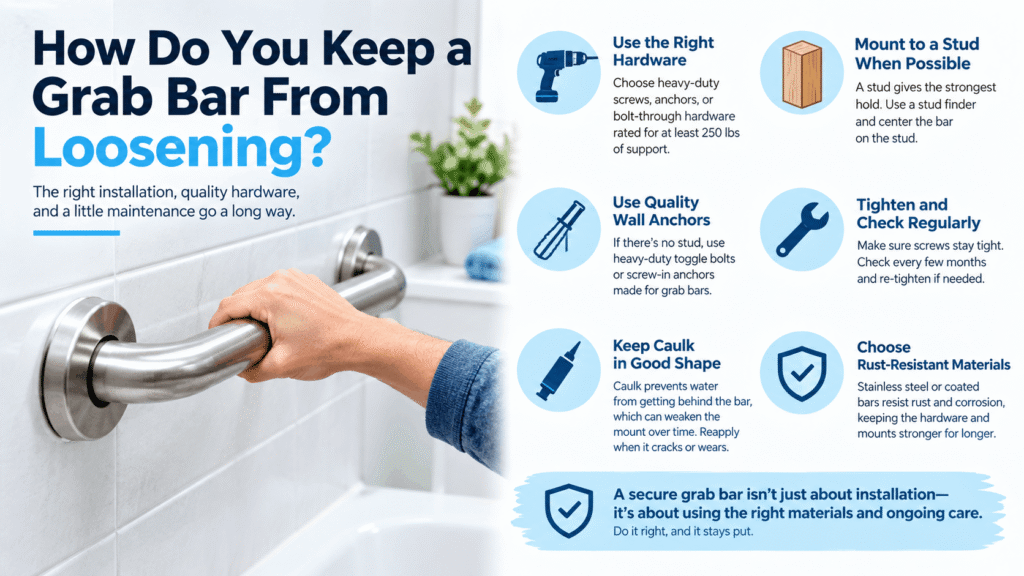
Check it monthly. A 60-second wiggle test catches most problems before they become failures.
Watch for cracked caulk, loose flange covers, and any new movement. Reseal gaps around the flange and tile. Follow the manufacturer’s care instructions for cleaning and hardware. For a wider home safety review, the CDC STEADI resource hub lists fall-prevention materials for older adults and carers.
Want the checklist? Download our printable “5-Minute Grab Bar Safety Check” to keep by the tub and repeat monthly.
FAQs
How do you tighten bathtub grab bar hardware?
Start by removing the decorative flange cover and inspecting the set screw with the appropriate hex key. If the flange itself moves, check the mounting screws for looseness or stripped threads. If necessary, secure the bar to a suitable wall stud using the fasteners specified by the manufacturer. Avoid overtightening screws in drywall or other wall materials. Before using the bar, apply firm pressure at both ends and in the centre to confirm that it remains stable.
What is a good grab bar for the side of a bathtub?
A horizontal or angled grab bar positioned near the tub entry can provide useful support when stepping over the tub wall. The best location depends on the bathtub design, the user’s reach, and how the person enters and exits the tub. For specific positioning guidance, see the entry grab bar placement height.
Should grab bars be angled or straight?
Both straight and angled grab bars can be appropriate. A horizontal bar can provide support while stepping over the tub wall or maintaining balance, while an angled bar may offer a more natural hand position for some users when pulling up or changing position. Secure installation is essential regardless of the bar’s orientation. See bathtub grab bar placement for more guidance on positioning.
Where should grab bars be installed in a bathroom?
Grab bars should be positioned where the user naturally needs support, such as near the bathtub entry, along the back wall, or near the exit point. Each bar should be securely attached to a suitable wall stud or properly installed structural backing. Use how to measure bathtub grab bar height to determine an appropriate height based on the user’s needs and reach.
How much weight should a grab bar hold?
The ADA Standards specify a 250-pound force requirement for grab bars, applied at any point on the bar, fastener, mounting device, or supporting structure, under ADA Standards §609.8. This requirement applies to covered public and commercial facilities rather than ordinary private homes, but it provides a useful safety reference. A grab bar that shifts or moves when pressure is applied should not be considered securely installed.
How often should I check my grab bars?
Perform a quick stability check about once a month and inspect the bar again after a slip, unusually heavy use, or nearby bathroom work. Check the set screw, mounting flange, fasteners, caulk, and surrounding tile for signs of movement or damage. Finding a small problem early can help prevent more extensive wall or tile damage later.
What to Do Next
Once your grab bar is secure, these guides cover the most common follow-up questions:
- No stud behind the bar? Learn how to handle mounting a bathtub grab bar without a stud using proper backing instead of relying on drywall anchors.
- Not sure the bar is in the right spot? Review bathtub grab bar placement to make sure it supports safe entry, exit, and standing movements.
- Need an exact mounting height? Follow how to measure bathtub grab bar height to position the bar at a height that suits the person who will use it.